Afterworld Survival Mechanics
Food, water, radiation, and shelter — the four axes your tribe must balance to last a century.
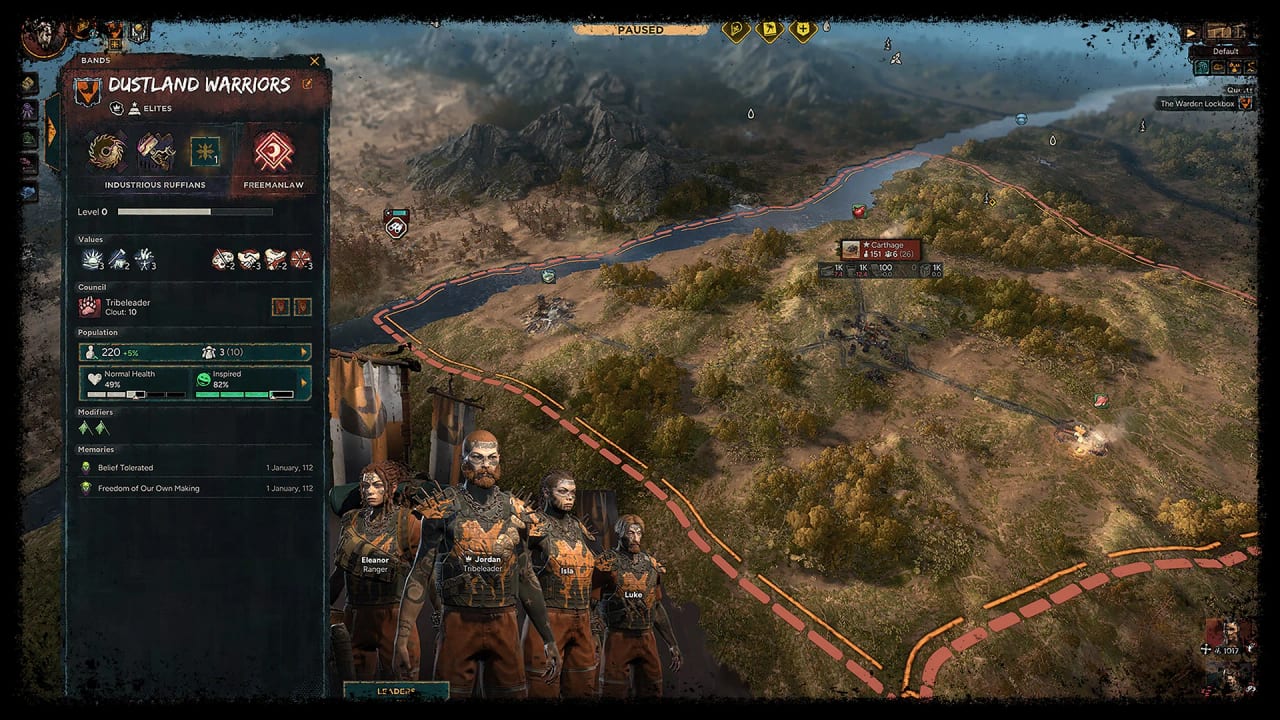
Survival is the first layer of Afterworld, and it is the one that ends campaigns fastest. Official materials and hands-on previews describe four interlocking systems: food, water, radiation, and shelter. Each feeds the others. A camp without clean water breeds disease. Radiation weakens bands faster than hunger in some regions. A shelter that cannot hold out the dust lets radiation in. The loop is simple to state and brutal to execute, especially when a migration decision forces you to abandon a well for a cleaner one. This page is the survival field guide for the pre-release period. The game is upcoming on Steam with no date.
Read this beside settlements for how camps work as objects on the map, and beside bands for how band health meters connect to these inputs. The Ideas Tree is where you research solutions; this page is about the problem.
Food: the first crisis
Every preview hands-on session ends with the same lesson: food is the first wall. The Shelterborn start with a shelter reactor about to fail — the first crisis is getting your people fed while scouting for a permanent settlement. Eurogamer’s hands-on describes rationing decisions as immediate and visible: bands have hunger meters, and a fed band has better health, better motivation, and better combat readiness.
Sources of food visible so far:
- Hunting. The eurogamer preview shows rangers hunting squirrels in provincial tiles. The yield appears small but steady.
- Farming. Crossing a river can unlock irrigation through the Ideas Tree, which converts fertility into food production.
- Raiding. Taking food from rivals is always on the table, but a raiding party that loses its convoy comes home hungry too.
- Trade. Neighboring tribes may have surplus you can buy, if your diplomacy allows it.
The cannibal Trauma is explicitly about food stress: Shelterfolk who turned to eating their own in a lean season develop a norm that resists food-sharing laws. That is a survival mechanic with political consequences. See origins for the full picture.
Water: the second wall
Clean water is the second survival pillar. The butwhytho preview notes that settlements near water are the most valuable real estate on the map, and the destructoid preview confirms that radiation contamination of water sources is a real threat. A province with high fertility and low radiation is the ideal — but those tiles are exactly what other bands want too.
Water management connects to settlement location in ways the Ideas Tree later unlocks: irrigation from rivers, water purification from remnant tech, and condensation collection from shelter upgrades. Until those ideas appear, your rangers are drinking from whatever the fog reveals.
Radiation: the slow killer
The ign hands-on preview is explicit: radiation is a constant threat, especially near ruined cities. The destructoid preview adds that contamination spreads through water and food chains, not only through direct exposure. A band can survive a radiation spike if its health is high; a band already weakened by hunger cannot.
Radiation levels vary by province. The eurogamer preview shows a province-overlay that highlights radiation zones in red. Migrating through a high-radiation region costs health. Settling there without shielding ideas from the Tree costs more.
The ancient tyrants are partly responsible for the radiation landscape: the same pre-Fall weapons that ended the old world scarred North America at the nuclear level. Some ruins are still active. See ancient-tyrants for why the endgame threat is also a survival modifier.
Shelter: the home base
Afterworld shelters are not decorative. The ign preview describes settlements as objects you build, upgrade, and can relocate. The official store copy confirms that migration is a feature — your capital is not sacred. A camp that cannot defend against the dust, the radiation, or a raider attack is a camp that fails.
Shelter upgrades visible in footage:
- Walls and defenses against raiders and radiation
- Resource storage to hold surplus food and water
- Workshop buildings for crafting and remnant research
- Housing for band population growth
The Shelterborn origin starts in an underground bunker — but the bunker is failing. The shelter upgrade tree for surface camps is a different path. Both ultimately require the same survival decisions: feed people, water them, shield them from the dust.
How survival connects to bands
Band health meters are the output of these four inputs. Eurogamer’s hands-on confirms three gauges per band: health (physical condition), motivation (willingness to work), and Inspiration (access to meaning and amenities). Hunger, dehydration, and radiation exposure drop health directly. Low health reduces population growth and combat effectiveness. The bands guide walks through how to manage those meters once they are stressed.
The interacton is also political: a Shelterfolk band with the cannibal Trauma will tolerate food stress differently than a zealot band with high faith. See origins and bands for the full chain.
The migration decision
The most distinctive survival mechanic in Afterworld is that settlements are not permanent. Official copy says your starting camp may not stay your capital. You can pack up and move when the land runs dry, a neighbor becomes threatening, or a better tile appears.
This is not a decision to make lightly. Eurogamer describes a migration as a multi-step process: selecting the migration target, routing convoys through provinces, managing supply lines during transit, and establishing the new camp before the old one’s supplies run out. A migration that arrives late is a band that starves.
See settlements for the full logistics picture.
What we are waiting for
Exact yield numbers per provincial tile, food spoilage rates, radiation accumulation mechanics, and the shelter upgrade tree in full. Hands-on previews have given us the shape; the diary that publishes the numbers will complete this page. Track the roadmap and updates hub.
Frequently Asked Questions
Quick answers about Afterworld before launch.
What are the four survival pillars in Afterworld?
Food, water, radiation, and shelter. All four are required for a band to survive; weakness in any one collapses the others.
Can I relocate my settlement?
Yes. Migration is a confirmed feature. Settlements can be packed up and moved when land runs dry or threats increase.
How does radiation work?
Radiation varies by province, appears highest near ruined cities, and spreads through food and water chains. See ancient-tyrants for the source.
Does food affect band health?
Directly. Bands have health meters; hunger drops them. See bands for the full interaction with motivation and Inspiration.