The Afterworld Map
A continent you recognize, with tribes, relics, and threats that never spawn the same way twice.
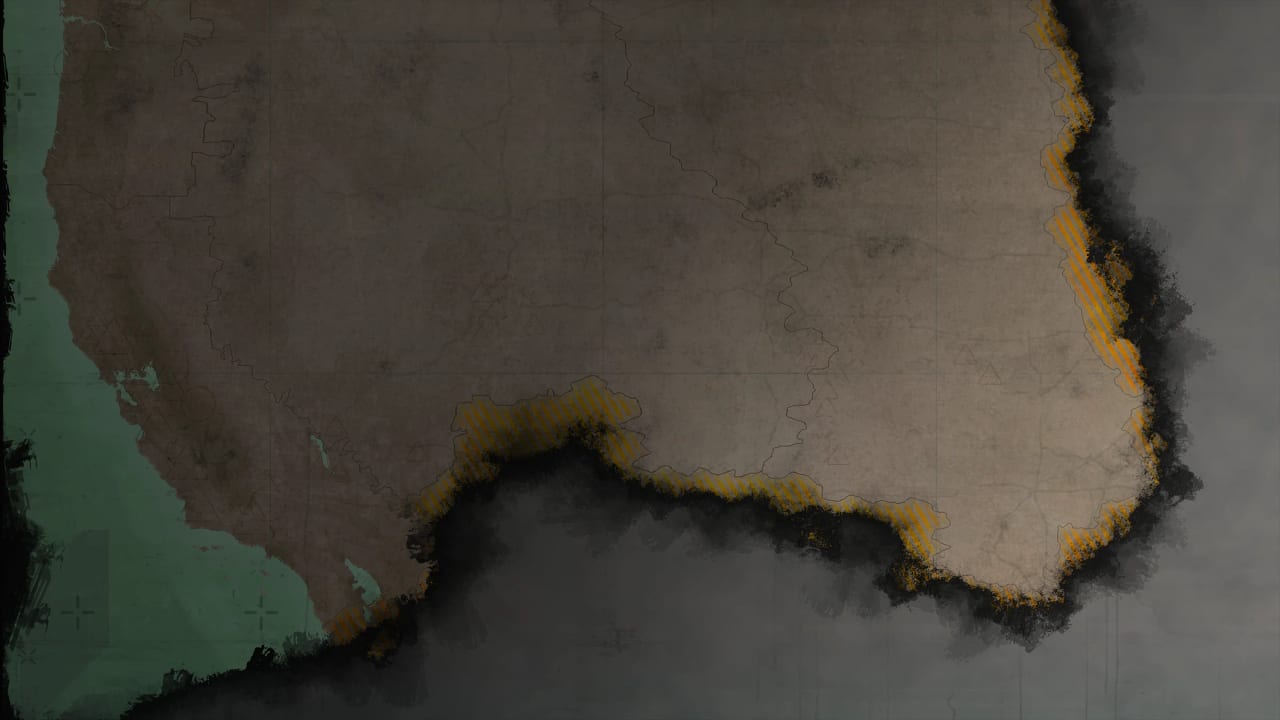
The Afterworld map is the sandbox the rest of the systems sit on. Official copy says you explore a procedurally generated North America whose terrain and geography stay recognizable, while resources, tribes, and threats reshuffle every campaign. That is why this wiki treats the map as a guide topic of its own, not a pretty loading screen. The game is still upcoming — Dan Lind said at Gamescom it remains in alpha and will not release in 2026 — so this page is a field guide to what Paradox has actually shown, not a pin list of every ruin.
Read it with how to play for the loop and settlements for why you will abandon a beautiful starting valley. The parent hub is guides.
What “procedural North America” means
You are not dropping onto a fantasy continent with made-up coastlines. The Great Lakes, the Rockies, the Gulf, and the old highway bones should still read as America. What changes is the strategic stuffing: which river still has water, which bunker is occupied, which tribe sits on the last tanker, which Ancient already claims a coast. Dev Diary 1 called this a mix of Stellaris-style randomization and the historical familiarity of other PDS maps.
That design has two player consequences. First, a YouTube capital build will not copy-paste. Second, the Ideas Tree is tied to what you actually bump into. Irrigation is not a year-1444 unlock. It is a river you found.
Fog, regions, territories
Gamescom B-roll shows a large regional map under fog of war. Regions can become territories. They start as unknown ground, not painted provinces. Scouting is how you buy information, and information is how you buy Ideas. Treat the first month as a survey, not a city-founding contest. The origins Trauma you picked will bias what you hunt first: food, faith, or remnants.
The Turns expedition
The official site invites you to join the Turns Expedition as they explore the map of Afterworld. Lind’s first diary promised an ongoing narrative of an explorer named Turns — interviews, reports, and other writings that sit beside the mechanical diaries. That is lore delivered as a travelogue, not as a loading-screen dump. When a Turns note names a place, this page will add it. Until then, do not trust a fan atlas of “confirmed cities.”
The official map teaser line is worth keeping in your head: the world teems with the Ancient dead. That is flavor, and it is also a warning that the prettiest tile may already have an owner. See Ancient Tyrants.
Movement, convoys, migration
The map is not a Civ-style sacred capital grid. Official text says you organize convoys to newly found wealth and may migrate the entire band when the land runs dry. Your starting settlement may not stay your capital. A good map player is a logistics player. Pair this page with settlements and the playstyle list if you intend to live as a circuit, not a monument.
Combat on the map
A Gamescom briefing reported by heise says you command units on the world map, while the battles themselves play out without your direct involvement — closer to Stellaris than to a real-time tactics layer. Details live on the combat guide. The implication for map play is that positioning, supply, and which army stands on which remnant matter more than kiting.
Multiplayer maps
Online co-op and competitive play are confirmed. A procedural continent with fog and relocating capitals is a raider’s playground. Humans will camp remnant sites. Read multiplayer before you promise a friend the same spawn twice.
What this page will not invent
No fake lat-long table. No leaked province IDs. No “best start is Texas.” When diary two (scheduled Tuesday 1 September 2026, focused on the world) names map layers, they go here and on the roadmap. Until then, the honest atlas is: recognizable North America, fog, regions that become territories, convoys, migration, and Ancients already sitting on the best tiles.
For a first-look judgment of how the map looks in alpha B-roll, use the preview. For hardware, system requirements are still TBC.
Frequently Asked Questions
Quick answers about Afterworld before launch.
Is the Afterworld map hand-crafted?
Geography is recognizable North America. Resources, tribes, and threats are procedural each campaign. See how to play.
Who is Turns?
An explorer whose reports Paradox is using as worldbuilding beside the mechanical diaries. Follow Dev Diary 1 and later roadmap notes.
Can I keep my starting location forever?
Official copy says you may migrate the whole band. The settlements guide treats relocation as a feature.
Will multiplayer use the same map?
Not published. Expect a procedural continent either way. Details: multiplayer.