How to Play Afterworld
The loop from scavenging band to dustland empire, based on official B-roll and Dev Diary 1.
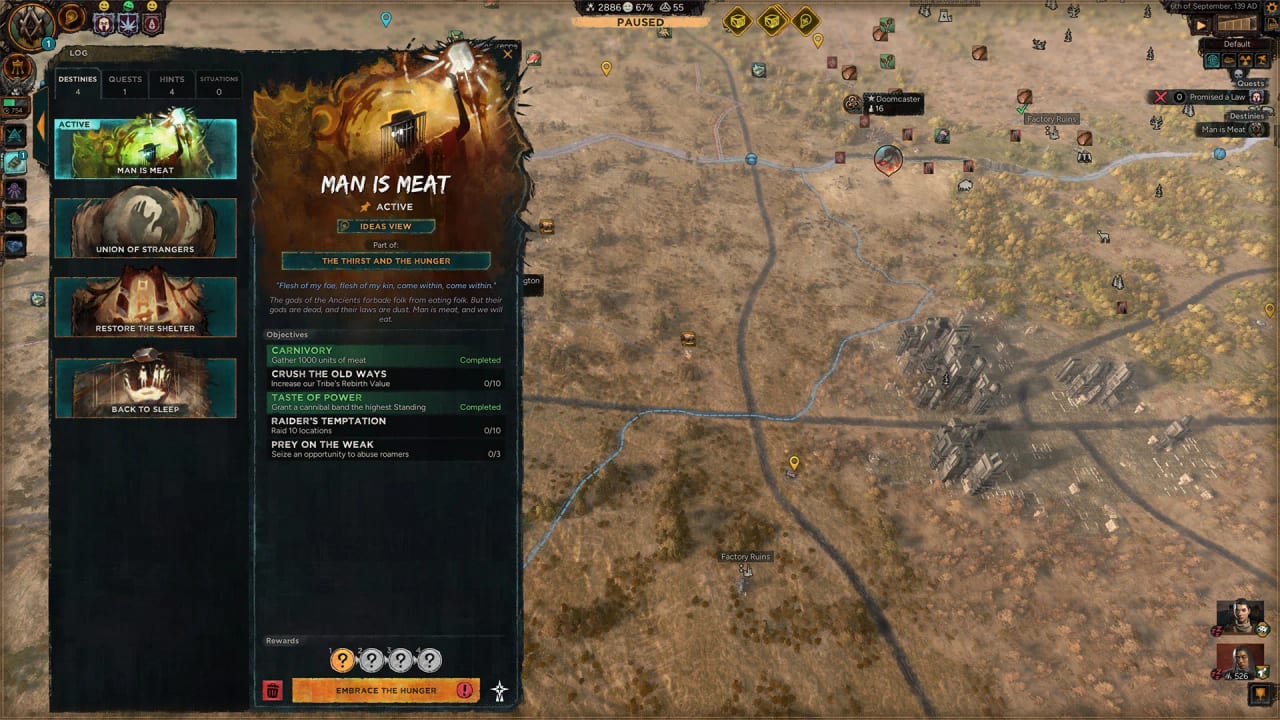
How to play Afterworld is still a reconstruction, because the campaign is upcoming and Steam has no date. The reconstruction is not guesswork. Paradox released roughly ten minutes of alpha B-roll with the announcement, and game director Dan Lind wrote the vision diary the same day. This page walks that loop in the order a new tribe will face it: survive, scout, settle, legislate, research through the Ideas Tree, then deal with other people and the Ancients.
Pair this with the beginner guide if you still need the pitch, and with settlements when you want logistics rather than the full loop.
The opening hours: stay alive, then look around
Footage and copy agree on the first crisis. You are not founding Rome on turn one. You scrape food, water, and fuel in a landscape that “wants you dead.” A recommended start shown in the alpha is Shelterborn / Shelterfolk, whose ancestors hid when the Ancients destroyed themselves. You pick a place to camp, then send scouts into fog-covered regions. Those regions can become territories later; they are not decorative hexes.
This is why relocation matters so early. Official text says your starting settlement may not stay your capital, and that you can migrate the entire band when the land runs dry. If you play Afterworld like a 4X that plants a city and never moves, you will fight the design. The settlements guide covers convoys, supply lines, and when to pick up the camp.
Laws and characters, not just tiles
The B-roll spends surprising time on policy. You decide who receives scarce goods, who speaks in leadership, and which habits become law — literacy, labor crews, drinking, slavery, and the rest of a new society’s ugly checklist. Named characters inside the tribe have stats. They can lead war parties and hold office. That is the Crusader Kings fingerprint Lind keeps pointing at: plans drift because people and crises intervene.
Religion is already more than a bonus slider. You can brand a philosophy orthodox or false, but believers and doubters split inside your own population, and neighbors bring mythologies that break trade. If you came here from Stellaris ethics, expect messier local faiths. The origins guide explains how Traumas and prologues preload some of those fights before you pass a single law.
Exploration is the research screen
Afterworld’s Ideas Tree does not drip a predetermined 19th-century file. Encounter a river and irrigation can appear. Meet a tribe and organized religion can appear. Pre-Fall remnants can rewrite what your nation is capable of — the same power that ended the old world, official copy warns, could end the new one. Playing well means routing scouts toward the ideas you actually want, then surviving long enough to research them.
The video below breaks down the official ten-minute reel: early law, scouting, a slice of combat, and the resource strip. Watch it as a systems tour, not as a finished tutorial.
Other people, then the Ancients
Once you can feed a camp, the map fills with rival bands. You can trade, absorb wanderers, raid, or vassalize. Other people are “your greatest resource and your greatest threat.” Competitive multiplayer and co-op exist for the same sandbox; see multiplayer rather than assuming a Stellaris-style late host-and-hope.
The endgame threat already has a name. The Ancients are immortal leaders from before The Fall. You can grow strong enough to challenge them, or work underneath them and climb. That fork is the closest thing Afterworld has announced to a victory-condition split. Details sit in Ancient Tyrants.
A practical play order for the first campaign (when it exists)
- Choose origin, prologue, and Trauma with a crisis in mind — famine, faith, or demagoguery. Use the origins tier list only as a pre-release opinion, not as a patch bible.
- Scout before you overbuild. Fog is information tax.
- Pass one or two laws that match your Trauma, not a full constitution.
- Unlock two Ideas that match the terrain you actually spawned.
- Decide whether this camp is a capital or a waystation.
- Meet one neighbor before you meet an Ancient.
Controls are not public. There is no keybind table to memorize and no fake WASD chart on this wiki. When Paradox publishes them, they will go here and on system requirements if they affect accessibility.
Until then, “how to play” means how the systems connect. If you want the narrative version of the same facts, read the preview. If you want the designer’s pillars in his own structure, stay with Dev Diary 1.
Frequently Asked Questions
Quick answers about Afterworld before launch.
Is there an official tutorial yet?
No public tutorial. Learn the loop from this page, the settlements guide, and the official B-roll until a playable build exists.
Do I play Afterworld like Crusader Kings or like Civilization?
Closer to Crusader Kings plus a survival city-layer. You relocate, legislate, and adapt. You do not simply paint the map from a sacred capital.
When do the Ancients show up?
They are framed as a late, continent-scale problem. Read Ancient Tyrants for the announced options: challenge them or work under them.
Where are the controls?
Not published. Ignore any site that lists fake keybinds. Check updates when Paradox posts them.