Afterworld Diplomacy and Trade
Other people are your greatest resource and your greatest threat — and sometimes both at once.
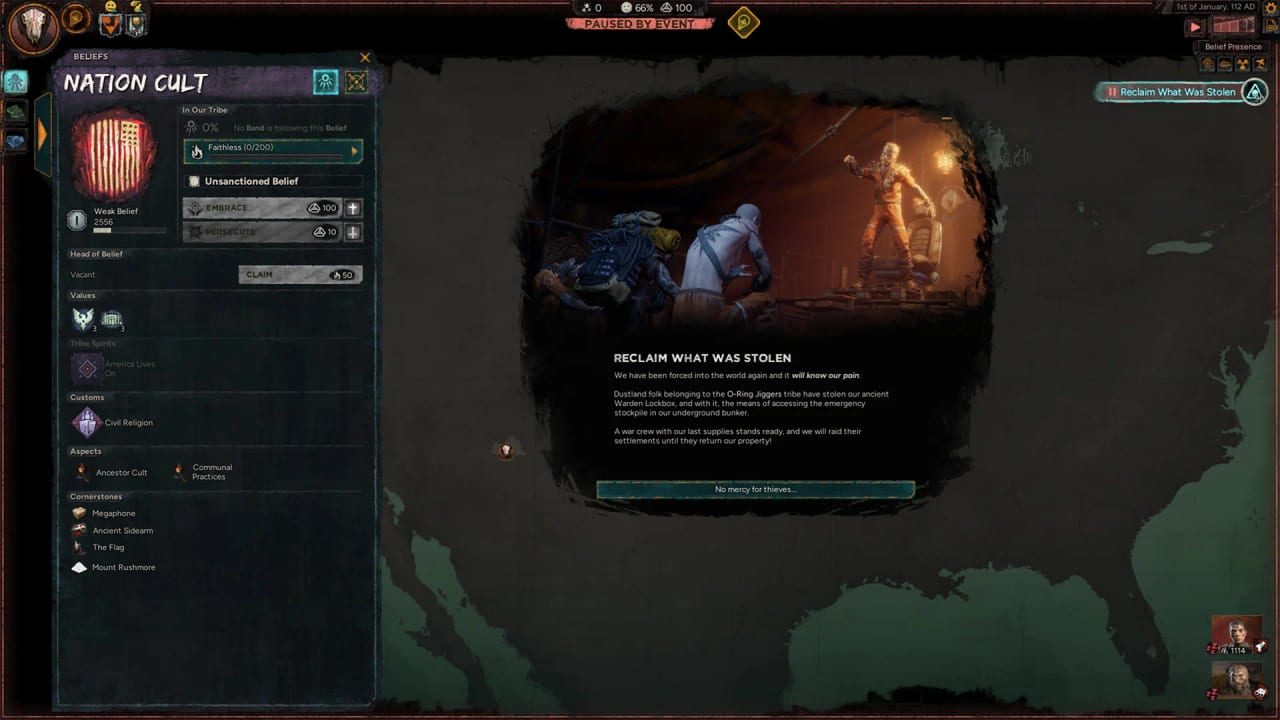
Diplomacy in Afterworld is not a sidebar screen. It is woven into the survival loop from the first week, because other bands are the first source of food, labor, and Ideas you cannot grow yourself. The official feature copy describes a four-track system: trade, negotiation, absorption, and force. Rock Paper Shotgun’s B-roll preview adds a fifth: faith conflict, where declaring a religion orthodox in your own tribe and heretical in a neighbor’s causes diplomatic penalties that no trade agreement can overcome. This page covers all five tracks based on official announcements and pre-release press coverage. The game is upcoming on Steam with no date.
Read this beside how to play for the full survival loop, and beside bands for how internal cohesion affects your diplomatic options. For the endgame diplomatic variant, see ancient-tyrants.
The five diplomatic tracks
Trade. Surplus food, water, and materials can move between bands by convoy. Eurogamer’s hands-on describes a situation where a neighboring band took meat in exchange for local knowledge — an information trade rather than a goods trade. Not all trade menus open for all origins: zealots and bunker isolationists do not share the same options.
Negotiation. Formal agreements short of absorption. The ign preview notes that diplomacy requires generating enough Survival Pride and sufficient standing. Survival Pride functions like experience points; standing is a reputation meter with neighboring bands. High standing opens better agreements.
Absorption. Recruiting wanderers or absorbing defeated rivals. The butwhytho preview describes this as one of the core ways to grow your labor force quickly. Absorbed bands bring their own norms and customs, which can conflict with yours — see bands for the internal political consequences.
Force. Raiding is always on the table. The official store copy is explicit. Raids take resources from rivals; they also generate enmity that closes trade menus. The combat guide covers the military layer.
Faith conflict. The nuclear ecclesia example from Rock Paper Shotgun’s preview is the most detailed diplomatic mechanic announced: declaring your faith orthodox creates a heretical neighbor automatically. That neighbor refuses trade. Their allies refuse trade. The orthodox declaration is not a toggle; it is a diplomatic event with cascade consequences. See religion for the full system.
Origins and diplomatic options
Not every origin opens the same diplomatic menu. The Shelterborn start with bunker isolationist habits; they may struggle to open trade with bands that remember them as surface dwellers who emerged too late. Zealots bring a faith system from the start, which means the nuclear ecclesia mechanic is active from month one — they are already generating heretics just by existing.
The playstyle tier list at playstyles maps diplomatic aggression versus diplomatic isolation against announced systems. A migrant playstyle can avoid neighbors entirely; a settler playstyle must manage them.
Standing and Survival Pride
The ign preview mentions that diplomacy requires generating enough Survival Pride and sufficient standing. Survival Pride is earned through exploration, discovery, and completing band milestones. Standing is built through consistent behavior: honoring agreements, avoiding raids on weaker neighbors, and providing trade value.
High standing unlocks formal alliance options. Low standing — from broken treaties, failed raids, or internal band crises — closes menus and generates hostile neighbors.
Multiplayer diplomacy
Online co-op and competitive multiplayer are both confirmed. In co-op, you can coordinate diplomatic approaches across multiple players — one player handles trade while another handles absorption. In competitive play, the five tracks above apply to human opponents as well as AI bands.
No public rules exist yet for pause, simultaneous turns, or host migration. Do not assume a competitive lobby behaves like a single-player campaign. See multiplayer.
What we are waiting for
The full diplomatic action menu, opinion modifiers, succession rules for absorbed bands, alliance tiers, and whether faith conflicts can be resolved without changing your declared religion. The playerguidebook.com coverage notes that Paradox has not published the complete diplomatic action menu. This page will update when diary two or the official site publishes the full list. Track progress on updates and the roadmap.
Until then, treat diplomacy as: trade what you can, absorb what you must, raid what trade cannot reach, and never declare a faith orthodox without reading religion first.
Frequently Asked Questions
Quick answers about Afterworld before launch.
What are the five diplomatic tracks in Afterworld?
Trade, negotiation, absorption, force, and faith conflict. All five can be active simultaneously in the same campaign.
Can I change a diplomatic relationship after declaring a faith?
Faith declarations create cascade diplomatic penalties. See religion for whether reversal is mechanically possible.
Do all origins have the same diplomatic options?
No. Zealots and bunker isolationists do not share the same trade menu. Origins are filters on diplomatic options.
How do I improve standing with neighboring bands?
By honoring agreements, avoiding unnecessary raids, and providing trade value. See bands for how internal crises affect external standing.