Afterworld Bands, Council, and the Soul of Your Nation
Groups of people with their own beliefs are what make Afterworld feel like a Paradox grand strategy.
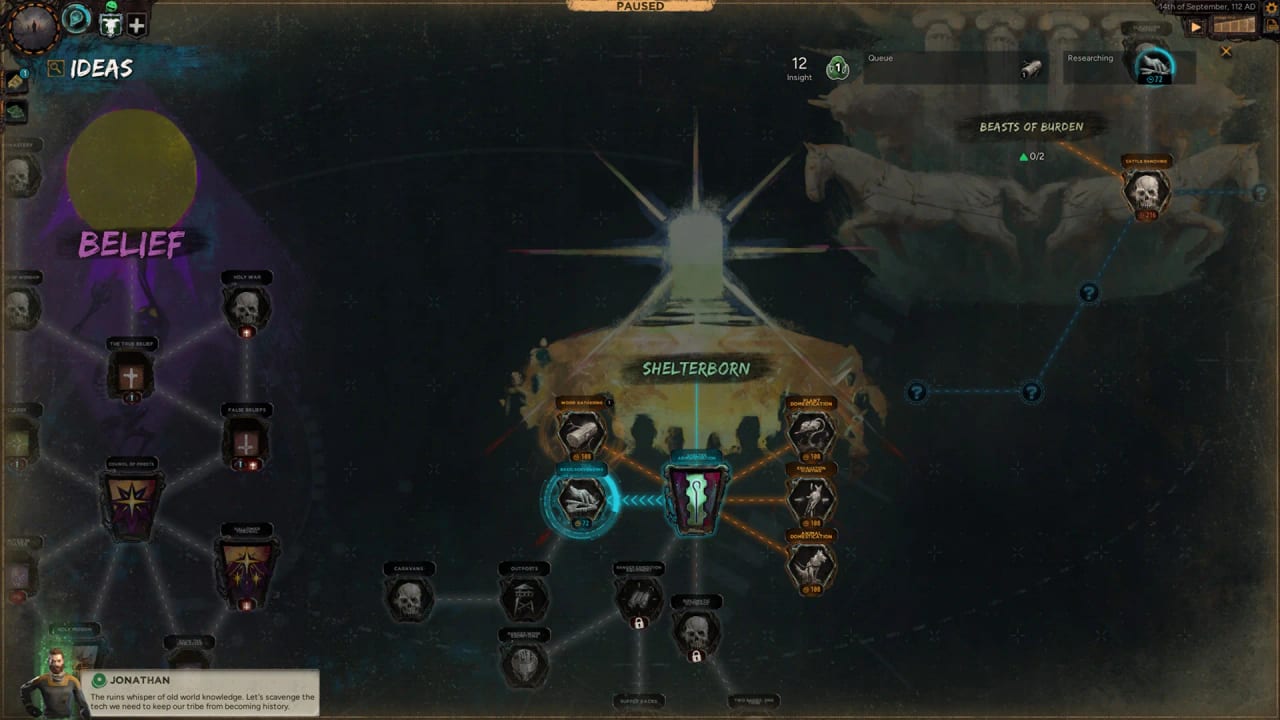
Bands are the social unit that makes Afterworld a Paradox grand strategy game and not a city-builder with a coat of paint. The Eurogamer hands-on preview describes them plainly: each band is a group of people with their own beliefs, and you can have several bands inside your tribe. Bands carry norms (deep, almost unchangeable traits inherited from your origin and prologue) and customs (unlockable upgrades you actively choose). They also have health, motivation, and Inspiration meters — three gauges that quietly decide whether your nation lasts a century or tears itself apart in winter two.
Read this with the origins guide (your bands inherit those scars), the laws guide (customs interact with policy toggles), and the how to play loop. New players should still start at getting started. For a tier-style comparison of political play, jump to the playstyle list.
What a band actually is
Think of a band as a sub-faction inside your nation. Each band shares values, holds a piece of the population, and pulls the council in a particular direction. In the Eurogamer preview, the player character runs the Shelterborn and finds that one band is rooted in seed-banking and shelter-focus — the prologue shaped them before they ever saw the sun. That is what norms do: they are inherited, not chosen.
Customs, by contrast, are picked later. They are unlockable traits that change how a band reacts to politics, war, and faith. Eurogamer’s example is a custom that pairs opposition to exploitation with enthusiasm for dark science — super-soldiers and nukes both. That sounds contradictory until you remember that this is the same band. People hold messy beliefs. The game lets you lean into that.
Why bands are political, not just flavor
Because bands assigned to your council will pull society in the direction their values demand. That sentence is the whole political layer in one line. If a band that opposes exploitation also occupies a council seat, you will have to choose between their values and your laws. If two bands with opposite norms sit on the same council, your council will pull in two directions and your laws will write themselves in the middle, badly.
This is where the GSG layer earns its keep. Crusader Kings players will read that and nod. Hearts of Iron players will read that and think about party popularity in Focus trees. Stellaris players will read that and recognize ethics drift. None of those parallels are accidental — Lind’s whole pitch in Dev Diary 1 is “GSG plus survival,” and bands are the GSG half delivered through characters instead of sliders.
Health, motivation, and Inspiration
Three meters shape band behavior:
- Health tracks whether a band can fight, work, and reproduce. A hungry band has worse health. A diseased band has worse health. A band with clean water and steady food has better health. The settlements guide is where this meter is fed.
- Motivation tracks whether a band wants to do any of that. A fed but ignored band with no voice in council will lose motivation. A motivated but starving band will revolt for being asked to work without eating.
- Inspiration is the late-cycle meter. It tracks access to amenities, luxuries, art, and meaning. Eurogamer warns that dropping Inspiration can cause revolts or civil wars — exactly the kind of failure state that ends a campaign if you do not notice it for ten turns.
All three meters show up on the settlement card in the alpha B-roll. The visual grammar is closer to Crusader Kings’ character panels than to a Civ citizen tile, which is the design tell that this is meant to be a character-driven political layer.
Custom versus norm — the strategic split
The cleanest way to think about it:
- Norms are the deck you were dealt. They will fight you on certain laws, full stop. A cannibal-lean-season Trauma gives you a norm that will resist food-sharing laws and lean toward demagoguery. The origins guide treats norms as the load-bearing piece of any origin choice.
- Customs are the deck you draw over time. They are the explicit gameplay lever the Ideas Tree opens up — the further your people explore, the more customs you can adopt. Customs can compound norms (a literacy-friendly custom on a literate bunker-origin band is a multiplier) or contradict them (a literacy-friendly custom on a nomadic zealot band is a fight).
That split is why two Shelterfolk campaigns will feel different even with the same Trauma. One player picks customs that lean into literacy and irrigation. Another picks customs that lean into raiding and salvage. Same norms, opposite nations.
How bands connect to laws and religion
Laws live on the same settlement card as bands. Every policy toggle you draft will be measured against band values. Draft literacy, and your cannibal-Shelterfolk norm will push back. Draft dark-science tolerance, and your exploitation-opposing band will vote against it. The laws guide walks through which toggles the B-roll actually shows.
Religion is the other place bands bite back. The Rock Paper Shotgun B-roll breakdown calls out a faith called the “nuclear ecclesia” — believers and doubters will split inside your own population regardless of what you declare orthodox. Bands are the vehicle for that split. Some bands will accept the doctrine. Some will dig in. If a band that opposes exploitation also leans into the nuclear ecclesia, expect paradox — and expect it to be playable. The religion guide covers the system.
How this page will grow
A real bands-and-council guide needs a roster of band archetypes, council mechanics, and named-character actions. None of that is published yet. Diary two was scheduled for Tuesday 1 September 2026 as a world diary; it had not surfaced as of 2 September 2026. When it does, this page will get a band-archetype table and named-character trait guidance. Until then, the honest summary is: bands are social sub-factions with norms (inherited) and customs (chosen), and they will pull your council and your laws in the directions their values demand. Watch health, motivation, and Inspiration — those three gauges decide whether your empire survives a century or breaks in winter.
For a different angle, see Dev Diary 1 for Lind’s own framing of the political layer, or the preview for how this system reads in the alpha B-roll.
Frequently Asked Questions
Quick answers about Afterworld before launch.
What is a band in Afterworld?
A social sub-faction inside your tribe with its own norms (inherited) and customs (chosen). Multiple bands exist at once and they pull the council in different directions. See the origins guide for how bands inherit starting values.
How do bands affect laws?
Bands on the council push policy in their values' direction. Drafting a law that contradicts a seated band's values triggers friction. Full toggle list lives on the laws guide.
What happens if Inspiration drops too low?
Eurogamer's preview warns that low Inspiration can lead to revolts or civil wars. Treat Inspiration as a late-cycle meter fed by amenities and meaning — see the settlements guide for upstream inputs.
Can I remove a band from the council?
No public mechanic yet. Diary two was scheduled for 1 September 2026 and had not surfaced as of 2 September 2026. This page will be updated when council rules are published — check the roadmap for the latest.