Religion and Faith in Afterworld
How orthodoxy, heresy, and belief-shaped politics turn a survival game into a Crusade.
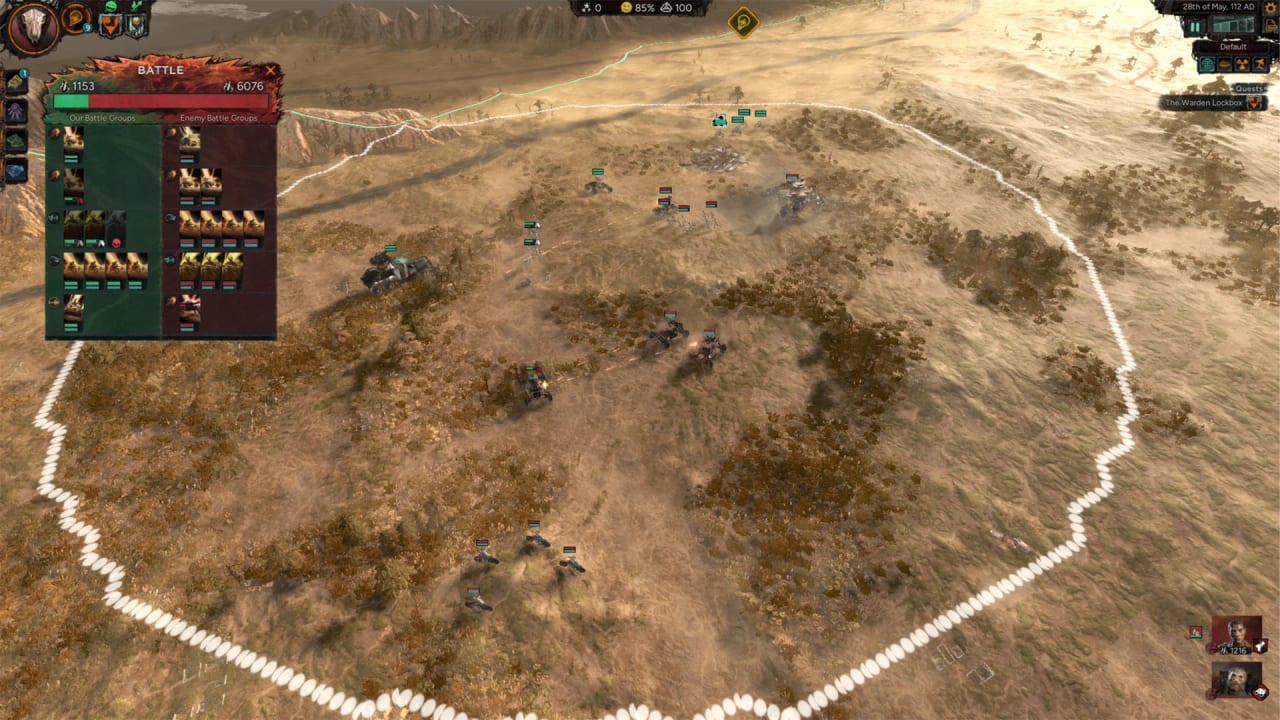
Religion is one of the two systems Rock Paper Shotgun specifically called out from the B-roll, and it is the part of Afterworld that looks closest to Crusader Kings rather than to a Civ-style ethics picker. Official copy and the press reel agree: when your tribe meets another tribe, organised religion can appear as an Idea on the Tree, and inside your own band you can declare a faith orthodox while labelling the next tribe’s version heretical. Believers and doubters split inside the same population regardless of what you decide. This page collects what is actually confirmed so you can plan a campaign where faith is a tool, not flavor. The game is still upcoming, on PC only, with no release date. The hub for all systems guides is the guides hub. For an origin that already leans into this system, read origins. For the bigger political picture, see how to play and ancient tyrants.
What the press reel showed
The official alpha B-roll from 25 August 2026 contains the most concrete evidence of how faith works. A popup appears on the Ideas Tree after scouts return from a new tribe. The popup sits next to portraits of named characters, with two soft buttons that read like ‘declare orthodox’ and ‘declare heretical.’ A second shot shows the inside of a settlement split between believers and doubters — the same people, two factions inside your own camp, neither of which respects the other for trade purposes. None of this is on a separate religion screen. It is grafted onto the Ideas Tree, the law toggles, and the settlement card.
The press call-out that made religion its own story is the ‘nuclear ecclesia’ example. A faith built around the pre-Fall weapons the Ancients used to wipe themselves out, with doctrine you can declare orthodox in your own tribe and heretical in the next. Lind’s framing — a religion whose gods are the machines that ended the old world — is what the wiki treats as the strongest signal yet that faith is a first-class political system with diplomacy penalties and Ideas Tree triggers, not a passive background slider.
Why faith is in this game at all
Paradox’s own design pillars, restated in Dev Diary 1, are ‘adapt to survive, rediscover, shape your society, easy to learn but difficult to survive, immersion.’ A religion system is the natural answer to ‘shape your society’ that does not break the GSG backbone. It is also the cleanest way to explain why two survivor tribes will not trade batteries for water when one thinks the other is secretly worshipping a toaster. Afterworld is a Paradox game where the politics of belief sit on top of the politics of tribe, law, and remnant tech.
If you came from Stellaris, do not expect a single ethics slider. If you came from Crusader Kings, you already know the ritual: declare a saint, vilify a rival saint, watch your vassal’s piety fall when you tax the temple. Afterworld is closer to the second model, and that is the most useful prior knowledge a returning Paradox player can carry into the alpha.
Orthodoxy, heresy, and the diplomatic cost
Every confirmed example from the B-roll and press coverage shares one mechanic: a doctrine has an in-group and an out-group, and the player chooses which tribe belongs to each. Orthodox for you can be heretical for the next tribe over, and that flips diplomacy and trade weights in directions Paradox has not yet published. The example Rock Paper Shotgun cited is a faith where the holy object is a piece of pre-Fall hardware. Declaring that hardware orthodox in your own camp means your engineers have a doctrinal mandate. Declaring it heretical in the next camp means traders on that border think your engineers are cursed.
In practice, that flips the table on a lot of PDS instincts. A tall empire built on a single remnant-tech miracle is now diplomatically toxic if the holy relic is also the corner-stone of the rival tribe’s religion. A wide empire built on toleration needs a different orthodoxy game in every neighbour. The ancient tyrants page already hints at this — the people who kept the machines are still around, and your cult may eventually put you on a collision course with the immortal who invented the relic in the first place.
Believers, doubters, and inside-the-camp politics
The reel’s most cited UI shot is the inside-the-camp split between believers and doubters. The visual language is closer to a Crusader Kings faction bar than to a Stellaris ethics meter. There is no clean percentage. There are portraits of named characters who lean one way, portraits who lean the other, and a settlement card whose law toggles interact with both groups. Expect the gameplay loop to feel like passing laws that one faction will cheer and the other will refuse to enforce.
For a planning guide, that means three rules of thumb before the game ships:
- Name your officers with a faith in mind. A cannibal-Shelterfolk elite has different default beliefs than a zealot origin’s council. The origins tier list is partly a tier list of starting belief pools.
- Treat Ideas unlocks as belief events. Organised religion appearing after you meet a tribe is a propaganda moment, not just a tech pop-up. The tribe that taught you the idea now has soft leverage.
- Read laws as belief levers. A literacy law, a drinking ban, a slavery ban, or a town-hall constitution can all be declared for religious reasons. The settlement card UI shown in the reel is the same screen where you will toggle which laws are ‘doctrinal.‘
Zealots as the on-ramp origin
The zealots origin is the spiritual mirror to the Shelterfolk origin. Both are named in the official announcement copy and treated as equally valid starting bands. Zealots are explicitly framed as ‘searching for their goddess in the dust,’ which is the cleanest match between an origin and the religion system. If you want to feel faith as a first-class mechanic on day one, pick zealots. If you want faith as a mid-game twist on a vault-origin story, pick Shelterfolk and let the cannibal-lean-season Trauma teach you what orthodoxy feels like when it bites back. The full origin breakdown is on origins and the ranking is on the origins tier list.
How religion touches the other systems
Laws. Laws are the place where belief becomes policy. Expect literacy, drinking, slavery, and town-hall governance toggles to double as religion toggles, because the reel shows the same UI for both. A religion that declares literacy orthodox can enforce a literacy law. A religion that declares literacy heretical can refuse to staff a school. The ancient tyrants page flags the worst case: a faith built around a specific relic may inherit laws that protect or punish everyone who touches the relic.
Diplomacy. Trade routes and tribute deals will be filtered by orthodoxy. A trader who shares your doctrine negotiates faster. A trader who worships the same relic as your declared heretic pays a markup. Multiplayer adds the messy variant: a rival player can declare your orthodoxy heretical on their own channel and not on yours, and you cannot force the channel without war.
Characters. Named officers come with belief leanings baked into their starting loyalty. Sending a believer to negotiate with a heretical tribe is a Crusader Kings-grade disaster. Sending a doubter to a holy site is worse. The how to play guide keeps the loop, but the religion screen sits inside the character panel.
Ideas Tree. The Tree is where the religion moment actually happens: an idea unlocks, and your orthodoxy settings decide whether the tribe that taught you the religion is an ally, a rival, or an automatic trade partner. Expect this to be the most-played-around-with element of the alpha.
What we still do not know
We do not have a list of named religions beyond the ‘nuclear ecclesia’ example. We do not have a UI screenshot Paradox has labelled ‘the religion screen’ on its own. We do not have numbers: orthodoxy cost, heresy penalty, missionary conversion rate, holy relic spawn odds. We will not invent any of that before a diary lands. The updates hub is the right place to watch, and the first week roundup has the diary cadence.
What we do have is enough to make one prediction: in co-op and competitive multiplayer, religion will be the most sabotaged system in the game. Stealing a rival’s orthodoxy on the world map will be the moral equivalent of sniping a relic in a souls-like. Plan accordingly.
How to use this page
If you have read the getting started path, treat this as the ‘religion’ detour before you choose an origin. If you have already picked zealots and want the full picture, read the ideas tree for the dynamic unlocks that will feed your faith, and the ancient tyrants page for the late-game religion collision with immortal holders of the relics your cult venerates. If you came from Crusader Kings, this is the place to start; if you came from Stellaris, you may need to recalibrate.
The fair one-line summary for the wiki: religion in Afterworld is a PDS politics-of-belief system grafted onto a survival GSG, with orthodox-vs-heretical toggles that double as diplomacy levers. It is the cleanest non-stellaris-style piece of the announced design. That is enough to plan a campaign when the doors open.
Frequently Asked Questions
Quick answers about Afterworld before launch.
What is the nuclear ecclesia in Afterworld?
A faith whose doctrine is built around the pre-Fall weapons the Ancients used to wipe themselves out. The example is widely cited in the B-roll press coverage. See religion and ancient tyrants.
Can you declare another tribe heretical?
Press coverage and the B-roll UI imply you can mark a doctrine orthodox for your own tribe and heretical for the next. Diplomacy and trade weights shift as a result. Full guide: religion.
Which origin plays best into the religion system?
Zealots are framed as searching for their goddess in the dust and are the cleanest on-ramp. Shelterfolk is the slower burn. Read origins and the origins tier list.
Does religion have its own UI screen?
Not a dedicated screen in the reel we have today. Belief shows up on the Ideas Tree, the law toggles, the settlement card, and the character panel. The page above unpacks each.